

Project
Date
Location
Status
Material
Function
Team
-
-
-
-
ABWAB PAVILION PROPOSAL
2020
Dubai, UAE
Design proposal
Metallic Structure
Pavilion proposal for ABWAB
Etienne Bastormagi
Maya Oraiby (landscape)
Aya Youssef
Fatima Matari
-
During Covid-19 pandemic, nature is believed to be ‘reclaiming’ Earth again (thehindu.com). Similarly, nature is reclaiming the City -once been its habitat- again. Wildlife including animals, insects and plants have been spotted invading backyards, streets and urban parks around the world recently, during the pandemic. Birdsongs were heard more often around cities and towns during lockdown.

-
Likewise, in the UAE people have noticed ‘more birdsongs than ever’ during lockdown
(thenational.ae)
Once streets have been cleared from city dwellers –who often cause traffic and noise pollution, birds have been returning to the city in an attempt to re-appropriate what was once part of their initial natural habitat.
Despite some species being adapted to urban settings and human presence, birds remain wild and human disruption could affect their behavior widely (thenational.ae)


-
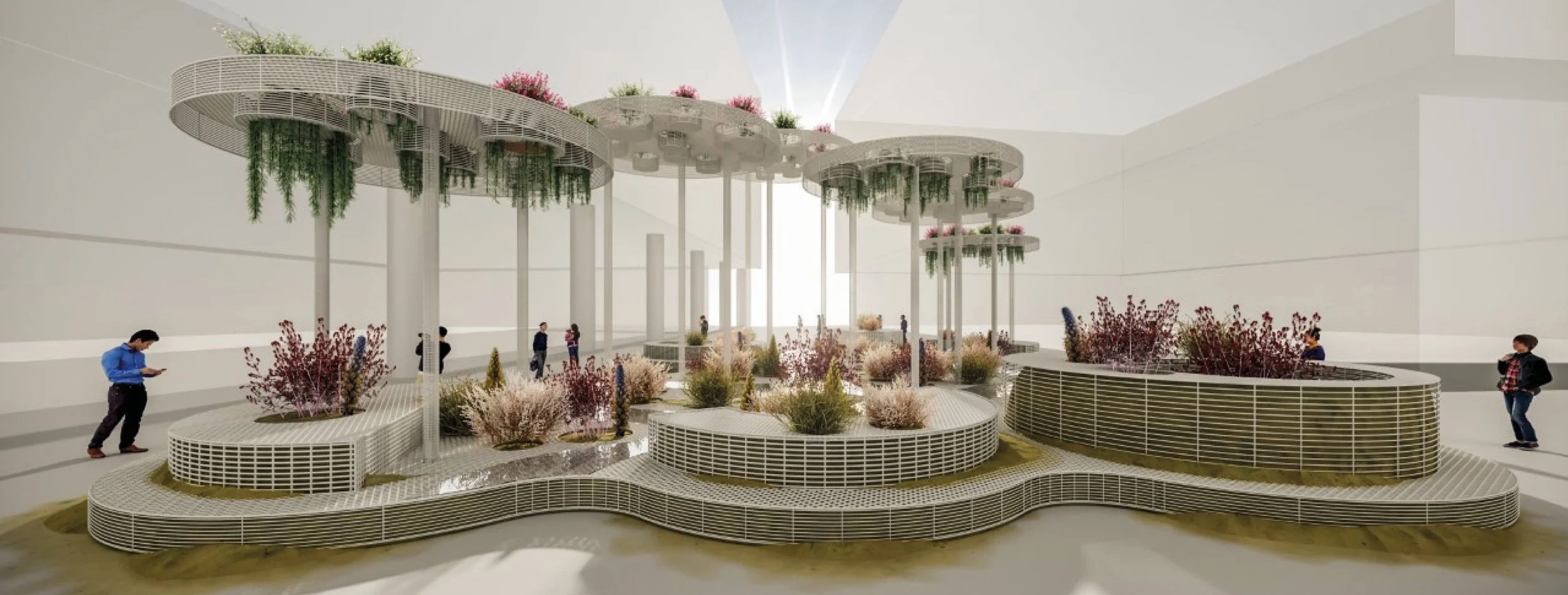
In a paralleled step to the ‘reclamation’ phenomenon of both Earth and the City that nature has already started globally through wildlife appropriating empty spaces, and as part of this urban ecological initiative, bringing nature back to invade the city of Dubai through design becomes essential. This is especially momentous to bringing back some aspects of the desert ecosystem to which wildlife, and particularly birds in the UAE might belong to, especially when desert land constitutes around 80% of the UAE’s land area and is clearly the most predominant ecosystem in the region.


-
Sand and native species of shrubs and bushes are brought to place to make stay in the city the resident birds who made a comeback and to attract many more species.
Some plant species are precisely selected to attract butterflies and pollinators. Additionally, water sources will be provided all around the installation to ensure the wellbeing and hydration of all returning living organisms.
Their presence along with the arid desert mood are meant to turn urban spaces and humans into the intruders/visitors in what was originally a desert land habitat. This is as a turning game where nature takes over temporarily, but invasively.
The rich biodiversity that a desert ecosystem brings with, is a phenomenon that should be celebrated wherever possible, and this design initiative during these challenging times could not be more appropriate for such a celebration.